
Sustainability

Sustainable Bicycle Supply Chain -
Driving Responsible Bicycle Business
Author: Dr K. B. Thakur, Secretary General, AICMA (& Former Director of the Ministry of Industry, GOI), New Delhi
The Context
The increasing consumption of finite natural resources is causing serious global challenges such as resource depletion, environmental degradation, climate change, and biodiversity loss. Manufacturing industries like metals, chemicals, and heavy industry contribute significantly to these issues, with 2.88 gigatons of carbon emissions produced in India alone in 2021. While these sectors are essential for economic growth and job creation, their high consumption of energy and natural resources leads to considerable environmental damage.
Even bicycles, often perceived as eco-friendly, are not immune to this impact. The processes and materials used in bicycle production—from raw material extraction to disposal—leave an environmental footprint. To make cycling genuinely sustainable, the bicycle industry needs to rethink its entire life cycle and adopt a Sustainable Bicycle Supply Chain (SBSC). This transition can significantly reduce the ecological footprint of bicycles while aligning the industry with global sustainability efforts.
The SBSC integrates sustainable practices across all stages of the supply chain, from raw material sourcing to end-of-life disposal. By embracing this model, the bicycle industry can minimize its environmental impact, enhance social responsibility, and realize economic benefits. Early adopters and innovators in this space can also gain a competitive edge by tapping into the growing consumer demand for sustainable products. The SBSC offers a clear path for the industry to align itself with global sustainability trends and set an example for other sectors to follow.
Adopting SBSC enables companies to align their operations with sustainable values, creating long-term value while addressing environmental and social concerns. This presents a strategic opportunity for the bicycle industry to lead in responsible business practices and drive global sustainability forward.
What is a Sustainable Bicycle Supply Chain (SBSC)?
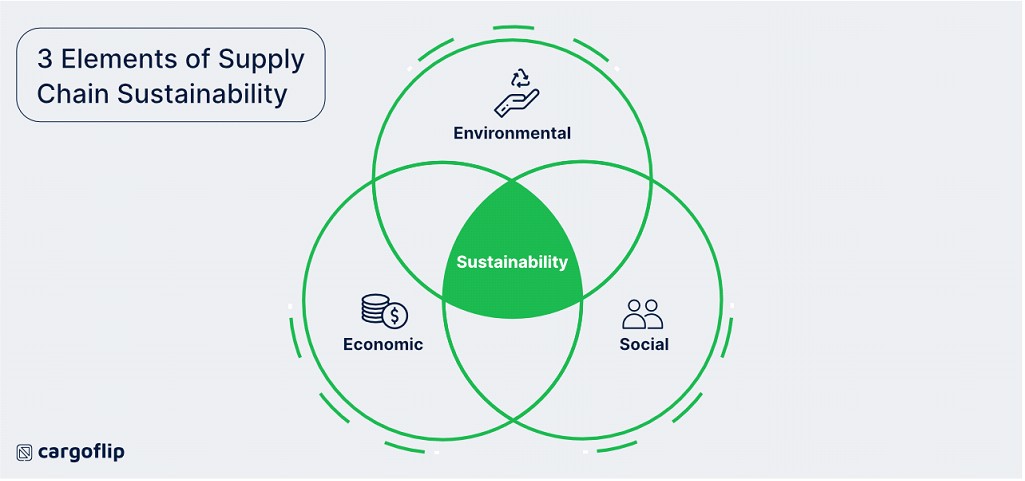
Sustainable Bicycle Supply Chain (SBSC) focuses on managing three core elements: environmental protection, social inclusion, and economic growth, often called “Planet, People, and Profit.” The goal is to balance these aspects by implementing sustainable practices and promoting good governance throughout the entire bicycle lifecycle.
Social sustainability in supply chains goes beyond just fair wages and safe working conditions. It encompasses Diversity, Equity, and Inclusion (DE&I) principles. This can involve promoting diversity among suppliers, ensuring equitable treatment of workers throughout the chain, and creating an inclusive environment where everyone feels empowered to contribute. By prioritizing DE&I, companies do the right thing and benefit from a more innovative, resilient, and socially responsible supply chain.
The push for sustainability is reshaping how established bicycle companies operate. Increasingly, businesses are driven by customer demand, corporate values, and new market opportunities to incorporate sustainability into their supply chain strategies. Traditional priorities such as quality, efficiency, and cost now coexist with considerations like working conditions and environmental impact. Embracing a sustainable supply chain not only helps address these concerns but also provides competitive advantages for companies willing to innovate early in the process. This shift is reflected by an understanding that sustainable supply chains mean profitable supply chains.
By capturing opportunities in the value chain, SBSC allows businesses to stay ahead in the rapidly evolving market while contributing to a more sustainable future for both the bicycle industry and the broader economy.
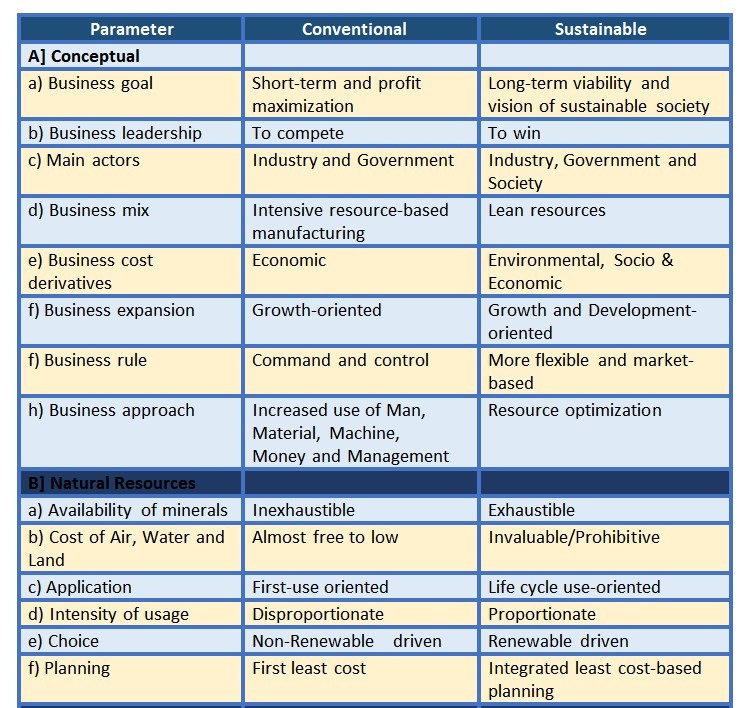
Conventional Vs Sustainable industrial model
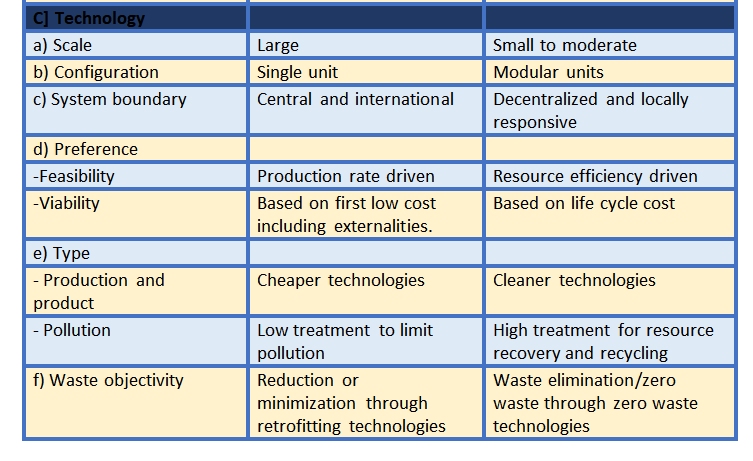
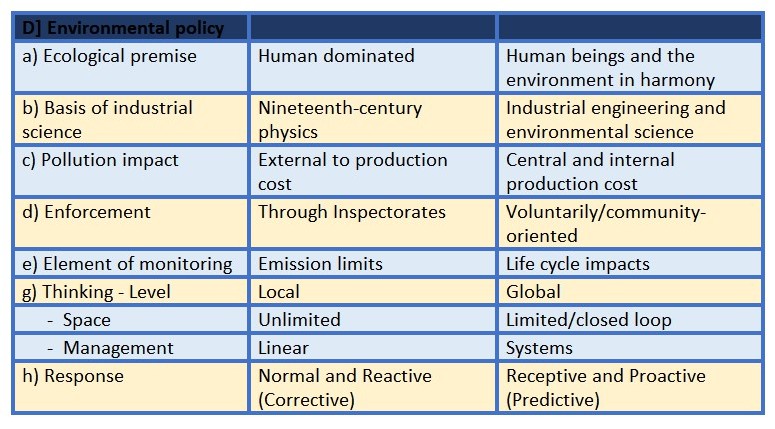
The comparison between the conventional and sustainable industrial models highlights fundamental differences across business goals, resource use, technology, and environmental policy. Conventional models focus on short-term profit maximization, competition, and intensive resource-based manufacturing, with costs primarily considered economic. In contrast, sustainable models prioritize long-term viability, collaboration between industry, government, and society, lean resource usage, and integrated cost planning that includes environmental and social factors. Technology in conventional models emphasizes large-scale, low-cost production with limited pollution treatment, while sustainable models favour smaller, modular units, resource efficiency, and cleaner technologies aimed at waste elimination. Environmental policies in conventional models view human impact as external, with enforcement through regulation, whereas sustainable models emphasize harmony between humans and the environment, voluntary compliance, and a proactive, global approach to ecological impacts and resource management. The bicycle industry is highly dependent on materials, which make up 70-80% of the cost, with 5% attributed to energy costs, and the remainder covering labour and overheads. To stay competitive, the industry needs to optimize costs over the product life cycle. Moving towards a sustainable model is the right step in that direction.
Conventional vs Sustainable Industrial Model
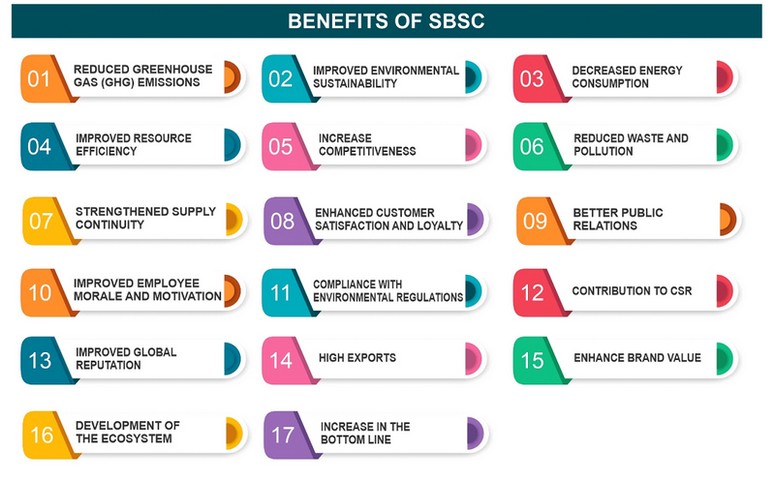
Benefits of SBSC
The Sustainable Business and Supply Chain (SBSC) has numerous benefits in terms of saving both hard and soft resources, as well as building the company and product’s branding, credibility, and trust. The image outlines 17 key benefits of SBSC, including reduced greenhouse gas emissions, improved environmental sustainability, decreased energy consumption, and improved resource efficiency. These initiatives also contribute to increased competitiveness, reduced waste and pollution, and enhanced customer satisfaction and loyalty. They bolster supply continuity, improve employee morale and motivation, and result in better public relations. Additionally, compliance with environmental regulations, contributions to corporate social responsibility (CSR), and an enhanced global reputation are all major outcomes, further solidifying the importance of sustainable practices for both the environment and business success.
Overcoming Challenges of SBSC
The transition toward a more sustainable supply chain often faces resistance, but preparing for potential hurdles will help you navigate the shift smoothly overcoming the following challenges.
1. Managing Costs: SBSC introduces added costs—such as employee training, hiring specialists, sourcing environmentally friendly materials, and implementing extra procedures. However, these investments will position your company as a competitive leader in the long run.
2. Rebuilding Frameworks: The current supply chain operates on an established framework. To meet sustainability goals, one may need to rework processes and select new partners aligned with the stated vision. Adjusting the network now will pay off in a more resilient, future-focused supply chain.
3. Operationalizing Sustainable Development: Integrating sustainability into daily operations may require an overhaul of infrastructure. While this demands time and commitment, once embedded, it will become a seamless part of the company culture and operations.
4. Bridging Gaps: Key components—like expertise, technology, processes, and policies—might be missing as you transition. Fortunately, as more sustainability experts join the workforce and digitization accelerates, these elements are becoming easier to implement and integrate.
5. Shifting Mindsets: Change can be uncomfortable, especially when the benefits aren’t immediately visible. Continuous communication is key. Emphasize that sustainability isn’t just a trend—it’s the future. Adopting these practices positions the company for long-term success and profitability.
The proposed framework of SBSC




The Vision
Guiding Concepts
Underlying principles
Diagnostic approaches
The vision is to integrate sustainability into every stage of the bicycle life cycle. This involves minimizing resource use, waste, environmental damage, and social impacts while maximizing economic value on a sustainable basis. SBSC has to be driven as a value driver.
SBSC is an overarching concept that encompasses all the previously coined concepts, including ecologically sustainable industrial development, industrial ecology, eco-corporatization, cleaner production, cradle-to-grave concept, cascaded use of materials, dematerialization, thinning down/soft material path, public trust doctrine, de minimis, eco-design, circular economy, zero defect and zero effect, lifestyle for the environment (LiFE), and low carbon/green economy.
The SBSC’s long-term success will be driven by the principles it adopts at its core. These principles commonly include the polluter pays principle, user pays principle, pollution prevention pays, intra-generational equity, inter-generational equity, precautionary approach, and no regrets policy.”
When assessing SBSC gaps and measures, it’s important to use validated approaches to diagnose its state. These approaches include environmental life cycle assessment, 7Rs, environmental soul searching, integrated resource planning, as low as reasonably achievable (ALARA), Best Practicable Environmental Option (BPEO), Best Available Technology Not Entailing Excessive Cost (BATNEEC), adoption of Environmental Quality Standards (EQS), critical load approach, environmental impact assessment, energy/water/environmental audit, natural resource accounting, end-of-the-pipe technologies, dilute and disperse/concentrate and contain zero pollution, and value engineering techniques.
Characteristics of SBSC
The long-term success of the SBSC would be determined if the following characteristics are embraced on a concurrent basis.
⦁ Equitable: Seek a win-win trading relationship that brings mutual benefits to both trading partners
⦁ Inclusive: Ensure small producers are included in participation by engaging them proactively
⦁ Comprehensive: Consider complete gains of environmental, social and economic benefits holistically
⦁ Dynamic: Adopt to changing circumstances in the operating environment and market. Opportunistic in the face of threat
⦁ Not Anthropocentric: Value nature intrinsically for the shake of itself
⦁ Inspiring: Let the success stories of SBSC inspire others to do more and better.
Harness technology to achieve SBSC Goals
Integrating technology and data at the outset is crucial to accelerating the path to SBSC goals. Industry 4.0 technologies, including Artificial Intelligence/Machine Learning (AI/ML), the Industrial Internet of Things (IIoT), Cloud, Blockchain, IWAI initiatives, and SMETA, could not only help increase process efficiencies but also enable technology-driven sustainable solutions for industries. These examples are elaborated on briefly.
IIoT platforms could create a connected manufacturing environment that enables the measurement of key Sustainability KPIs in real time and helps manufacturers reduce or eliminate their carbon footprint.
Cloud could help organizations accelerate the building of digital twins of the manufacturing process, which could simulate the operating procedure such that waste is minimized; and it could also enable reuse of the product, thereby eliminating the wastage industrial manufacturers have to deal with in the transition towards circular economy.
Blockchain could be used in waste management systems to track waste from its generation till the end while capturing all the Sustainability metrics.
Impact-Weighted Accounts Initiative (IWAI) was created by Harvard Business School to assess the degree of impact that many large companies have on social, environmental, and economic areas.
SMETA standards are firmly rooted in the Ethical Trading Initiative (ETI) Base Code, which, in turn, is founded on the conventions of the International Labor Organization (ILO). SMETA, which stands for Sedex Members Ethical Trade Audit, is a comprehensive and widely recognized audit methodology. SMETA audits evaluate various aspects of a company’s operations, including labour, health and safety, environmental impact, and business ethics.
Adoption of Management System Standards
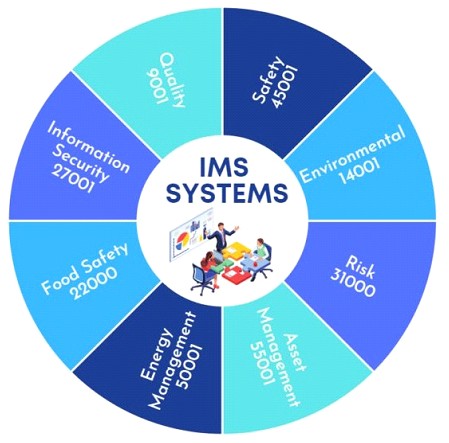
“SBSC” adaption has to be a core and compulsory responsibility, which would require the introduction of relevant Management System Standards. The adoption augments companies to migrate from non-compliance to compliance and then beyond the letter of law voluntarily. ISO Management System Standards (MSS) help organizations improve their performance by specifying repeatable steps that organizations consciously implement to achieve their goals and objectives.
They also help to create an organizational culture that engages in a continuous cycle of self-evaluation, correction, and improvement of operations and processes through heightened employee awareness, management leadership, and commitment. In a nutshell, it helps to push-pull the SBSC objectives and its goals.
The benefits of an effective management system for an organization include:
⦁ More efficient use of resources and improved financial performance
⦁ Improved risk management and protection of people and the environment
⦁ Increased capability to deliver consistent and improved services and products, thereby increasing value to customers and all other stakeholders
Some of the generic standards recommended for adoption by the bicycle industry include:
⦁ ISO 9001 is one of the most basic management standards in the manufacturing industry, and an important certification for any organization concerned about improving quality control
⦁ ISO 14001 standards cover an organization’s environmental management policies, from long-term sustainability and carbon management to day-to-day waste reduction and resource allocation
⦁ ISO 50001: 2018 covers the Energy Management System
⦁ An ISO 50001-certified management system formalizes an organization’s energy management policies to reduce carbon footprint and operating costs
⦁ OHSAS 18001 / ISO 45001 is a management-level framework for improving health and safety in your organization
⦁ ISO 27001 is a progressive framework for mitigating the risk of data breaches or other online attacks
⦁ ISO 26000, is a set of voluntary standards to help companies implement corporate social responsibility
7R Sustainable Strategies
The simple strategies for sustainable gains may include 7Rs as defined hereinunder
⦁ Refine: Improve raw materials for better use.
⦁ Rationalize: Optimize resources in production.
⦁ Reduce: Minimize resource use with eco-friendly designs.
⦁ Return: Reuse parts in good condition.
⦁ Repair: Fix items to extend their life.
⦁ Reproduce: Turn waste into new products.
⦁ Restore: Safely dispose of non-reusable materials.
Employing Corporate Social responsibility
⦁ Corporate social responsibility (CSR) is a business model by which companies make a concerted effort to operate in ways that enhance rather than degrade society and the environment.
⦁ CSR can help improve society and promote a positive brand image for companies.
⦁ CSR includes four categories: environmental impacts, ethical responsibility, philanthropic endeavours, and financial responsibilities.
Specific categories of measures under SBSC
The specific measures that can be undertaken under SBSC may be employed systematically, scientifically and synergistically include. The strategy of each company will vary depending on the sustainability gaps and scope for improvement.
The SBSC opportunities for execution, particularly the large SBSC opportunities would have to pass through planning, execution, monitoring and control. For medium and large SBSC opportunities, goal fixing would be necessary, which may be either quantitative or/and qualitative. The implemented projects will have to be monitored and reviewed for continuous evaluation of benefits achieved as against the envisaged benefits.
⦁ Set a Clear Vision: Integrate sustainability into every stage of the bicycle’s life cycle, from design to disposal.
⦁ Product Design: Adopt Eco-friendly design
⦁ Utilize sustainable materials: Switch to recycled metals like Aluminium (For exa: Primary Aluminium needs 15000 units of electricity per tonne and recycled Aluminium needs 500 units per tonne), plastics, bio-based materials and sustainable rubber.
⦁ Employ appropriate concepts, principles and approaches
⦁ Adopt green/smart technologies: Segregate waste, Recycle, and minimize hazardous materials, apply circular design, end-of-the-life recycling & 3D printing,
⦁ Energy Efficiency: Introduce energy audits, procure energy-efficient machinery and switch to renewable energy like solar.
⦁ Environmental Audits: Regular checks to ensure compliance with sustainability norms, and Install air filters and monitor pollutants.
⦁ Chemical Management: Safely store and use less harmful chemicals.
⦁ Water Management: Harvest /Save water and recycle it where possible. Aim for zero waste Water System.
⦁ Noise Control: Reduce machinery noise
⦁ Sustainable Sourcing: Audit suppliers for the SBSC & develop local sourcing
⦁ Continuous Innovation & digitization: Keep improving through research, stakeholder collaboration, and adapting to evolving sustainability standards & best practices
⦁ Employee welfare: Training, protection from occupational hazards
⦁ Certifications: Obtain the most relevant ISO certifications.
⦁ Compliance: Stay updated with environmental laws and regulations.
⦁ Packaging: Use eco-friendly packaging.
⦁ Biodiversity Protection: Protect natural habitats near plants and use native landscaping.
⦁ Green Logistics: Use energy-efficient transport and carbon offsetting.
⦁ Consumer/Community Engagement: Involve local communities in environmental & social efforts.
⦁ Sustainability Reporting: Track and publish progress on environmental & social goals & performance.
By adopting these practices, the bicycle industry can contribute to a more sustainable future.
Actual measures undertaken by the Bicycle Industry
Being the first country to have mandated corporate social responsibility, India has taken the lead in demanding ethical commitments from businesses for some time. However, different countries have different approaches and beliefs when it comes to ensuring responsible business activity in SBSC.
⦁ International
A1. Decathlon
Decathlon’s 2020-2026 sustainability strategy focuses on three key goals: Developing People, Preserving Nature, and Creating Sustainable Value. The company aims to extend product lifecycles through repairs and second-life initiatives, with a goal of zero product waste by 2026. Strong C-suite support is crucial for smoother decision-making and boosting accountability.
A2. Trek cycles
Trek Cycles’ motto, “Better business, better planet,” reflects its commitment to sustainability. Recognizing that even environmentally beneficial products like bicycles have an impact, Trek conducted its first emissions audit in 2021, followed by deeper analysis and carbon reduction goals in 2023. Sustainability is now integral to Trek’s operations. Their report outlines emissions, corporate goals, and business changes for a more sustainable future. It’s worth exploring for a closer look at their progress and commitment.
A3. Giant Group
Giant Group’s ESG Strategy Book, centered on “Cycling for a Better Future,” focuses on three pillars: Innovating a Clean Future, Transforming for Circularity, and Mobilizing for DEI. For 50 years, Giant has advanced cycling with innovative, sustainable practices. Their ESG Strategy Book is available online for those interested in exploring the company’s commitment to sustainability and corporate responsibility.
A4. Shimano Group
The Shimano Group is committed to creating a sustainable world. They are tackling climate change by reducing CO2 emissions, transitioning to renewable energy, and promoting the 3Rs (Reduce, Reuse, Recycle). Together, it is riding towards a greener future. For more details, please refer to the ESG sheet of Shimano.
A5. Country level initiatives
⦁ In the UK, quoted companies must report annual greenhouse gas emissions, diversity, and human rights. Companies with a premium listing of equity shares also need to report on Corporate Governance principles.
⦁ In the EU, large companies and public-interest companies must disclose environmental, social, and employee-related matters.
⦁ In the US, listed companies must disclose environmental compliance expenses and adopt a code of business conduct and ethics.
⦁ In China, there are seven regulations mandating disclosure on sustainability matters, including the Environmental Information Disclosure Act, of 2008. Large companies listed on the Shanghai Stock Exchange must also submit a separate environmental disclosure report.
B. National
The Indian bicycle industry is recognizing the increasing importance of sustainability to compete with imports and in the international bicycle market. India has implemented new environment, social, and governance (ESG) reporting requirements for the top 1,000 listed companies in the country by market capitalization. The Securities and Exchange Board of India (SEBI) has mandated that these companies disclose their ESG performance through a new format called the Business Responsibility and Sustainability Report (BRSR). While BRSR reporting was voluntary for the fiscal year 2021-22, it will become mandatory from the fiscal year 2022-23.
The Ministry of Environment and Forest is pursuing bicycle tire and tube companies to implement “Waste Tyre Recycling,” which is mandatory for automotive tires in India. As sustainability becomes increasingly important, it is expected that more laws for sustainability monitoring and compliance will be introduced due to stakeholder pressure and resource constraints. Additionally, in the export space, importers are demanding compliance with newer sustainability-related regulations.
Indian bicycle companies are proactively addressing the emerging sustainability requirements including social sustainability through CSR activities. Some examples of sustainability initiatives by AICMA member companies include:
⦁ Hero Cycles: Using RO water instead of DM water in the boiler, reducing effluent and solid waste generation, and eliminating plastic from packaging. It donated Rs 7.4 Crores to the PM Cares fund.
⦁ TI Cycles: Introducing a business responsibility report following SEBI guidelines. Implementing measures such as a quick colour change plant and productivity improvement in TPS technology. It supported the medical infrastructure of PHCs.
⦁ Avon Cycles: Converting the fuel of the oven from HSD to LPG, and introducing VMC Machine and 3D printer. Donated ambulance with ventilator worth Rs 35 lakhs to Samvedna trust.
⦁ Hero Ecotech: Installing SCADA for productivity improvement, implementing an oil cleaning process, setting up a 1 MW solar plant, and adopting zero water discharge. Donated Rs 25 lakhs for setting up of ICU for Covid patients
⦁ Avon Ispat & Power Limited: Installing 4 MW of solar energy and replacing fluorescent lamps with LEDs.
The Conclusion
In conclusion, transitioning to a Sustainable Bicycle Supply Chain (SBSC) approach is crucial for the bicycle industry to mitigate its environmental impact and align with global sustainability efforts. By integrating sustainable practices across all stages of the supply chain, from raw material sourcing to end-of-life disposal, the industry can minimize its ecological footprint, enhance social responsibility, and realize economic benefits. Embracing a sustainable supply chain not only addresses environmental and social concerns but also provides competitive advantages for companies willing to innovate early in the process.
The shift towards sustainability presents a strategic opportunity for the bicycle industry to lead in responsible business practices and drive global sustainability forward. Ultimately, the adoption of a Sustainable Bicycle Supply Chain (SBSC) enables companies to stay ahead in the rapidly evolving market while contributing to a more sustainable future for both the bicycle industry and the broader economy. This shift towards sustainability represents a fundamental change in business goals, resource use, technology, and environmental policy, emphasizing long-term viability, collaboration, resource efficiency, and integrated cost planning that includes environmental and social factors. By prioritizing sustainability, the bicycle industry can set an example for other sectors to follow and play a significant role in promoting environmental protection, social inclusion, and economic growth.
Note: The author acknowledges all references and sources. The material is used in the broader public interest.
Disclaimer: The views expressed in this article are of the author and not of the organization he is associated.